








Course Architects: Dana Fry and Jason Straka (2022)
Year Opened: July, 2022
Location: Swainton, New Jersey
Slope: Meade/Sherman 147, Meade/Grant 150, Sherman/Grant 143
Rating: Meade/Sherman 74.2, Meade/Grant 74.6, Sherman/Grant 74.8
Par: 72
Yardages: Meade/Sherman (7,089), Meade/Grant (7,173), Sherman/Grant (7,274)
MEADE SHERMAN GRANT
Hole-by-Hole: 1 – Par 4 401 Yds 1 – Par 4 395 Yds 1 – Par 4 401 Yds
2 – Par 4 370 Yds 2 – Par 3 194 Yds 2 – Par 5 541 Yds
3 – Par 4 397 Yds 3 – Par 4 466 Yds 3 – Par 3 135 Yds
4 – Par 4 325 Yds 4 – Par 4 434 Yds 4 – Par 4 443 Yds
5 – Par 3 161 Yds 5 – Par 4 431 Yds 5 – Par 5 571 Yds
6 – Par 5 581 Yds 6 – Par 5 558 Yds 6 – Par 3 196 Yds
7 – Par 4 480 Yds 7 – Par 3 247 Yds 7 – Par 4 495 Yds
8 – Par 5 585 Yds 8 – Par 4 340 Yds 8 – Par 4 442 Yds
9 – Par 3 194 Yds 9 – Par 5 530 Yds 9 – Par 4 455 Yds
Par 36 3,494 Yds Par 36 3,595 Yds Par 36 3,679 Yds
Key Events Held: Southeast PA Golf Tournament (2024-26).
Awards Won: Voted 2nd Best New Private Course by Golf Digest (2022),
Ranked 13th by Golf Digest – Best in the State of New Jersey (2026).
Web site: www.unionleague.org
HISTORY: The property that Union League National resides upon was originally known as Sand Barrens Golf Club, which debuted in 1996. Dana Fry and his previous construction partner, Dr. Michael Hurdzan crafted this 27-hole layout, which featured more than 100 acres of sand and plenty of waste areas.
The course was originally going to be a tree-lined venue, but after moving plenty of dirt, they. uncovered a natural layer of sand beneath the property and so the plans changed.
The duo crafted some memorable layouts, including Hamilton Farm Golf Club, Neshanic Valley Golf Course and the championship venue of Erin Hills to name a few. Hills, which has hosted the 2017 U.S. Open won by Brooks Koepka, has also been the layout for the U.S. Amateur and the U.S. Women’s Open. However, in 2012 the pair amicably split, as they went their separate ways.
Just 21 years after opening, Sand Barrens was purchased by the Union League of Philadelphia in an effort to serve its over 4,000 active members visiting the Jersey Shore. Union League National is part of a growing strategy in the golf business to acquire several venues for its members. The National is one of three courses in its portfolio, joining Union League at Torresdale and Union League at Liberty Hill.
It made sense for the Union League to bring in Fry and his new partner, Jason Straka to reimagine, renovate and redesign the property into what it is today, one of the best new private courses when it opened in 2022.
Straka, who started with Hurdzan/Fry back in 1995, maintained his association with Fry and has helped to create some of the finest layouts in the world. “I love creating beautiful golf experiences that can be enjoyed around the world and across many generations,” said Straka. “Golf offers genuine pleasure to friends and families, amateurs and professionals, and is a sport which can be played by young and old alike. I appreciate the chance to contribute to the enduring legacy of this great game.”
After purchasing the land in 2017, it took five years for Fry and Straka to complete this massive project, but at no time was the property closed for play, as they always left 18 holes playable for the members.
The task of creating a memorable experience was huge. More than 1.6 million cubic yards of earth were moved on the 268-acre parcel of land. In fact, it rose 78 feet above sea level, more than 56 feet above the original grade.
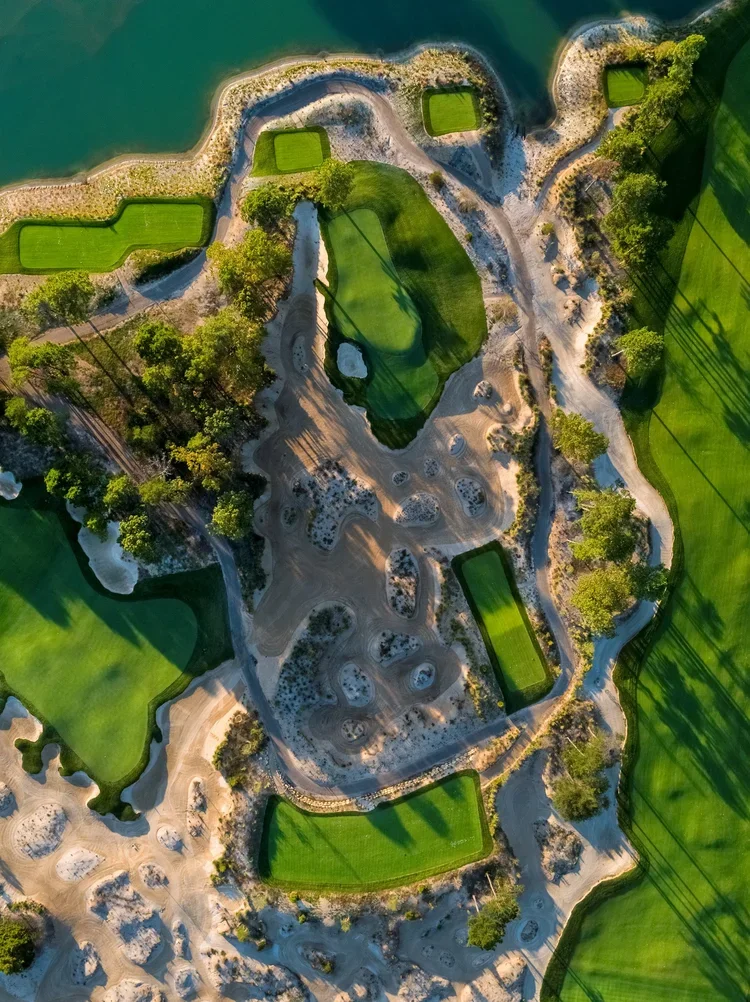
“We deployed The Big Fill at Calusa Pines in Florida, and Yas Acres in Abu Dhabi, among other properties, but never on this scale,” commented Fry. “This is honestly the only course project I know of, anywhere, that combines the two crucial elements: this massive earth-moving style and a Pine Valley-style palette — the soil and vegetation that we associate with great golf.”
The three nines of Meade, Sherman and Grant are named after the Civil War generals, thus honoring the historic roots and founding purpose of the Union League. The Union League of Philadelphia was founded in 1862, during the height of the American Civil War.
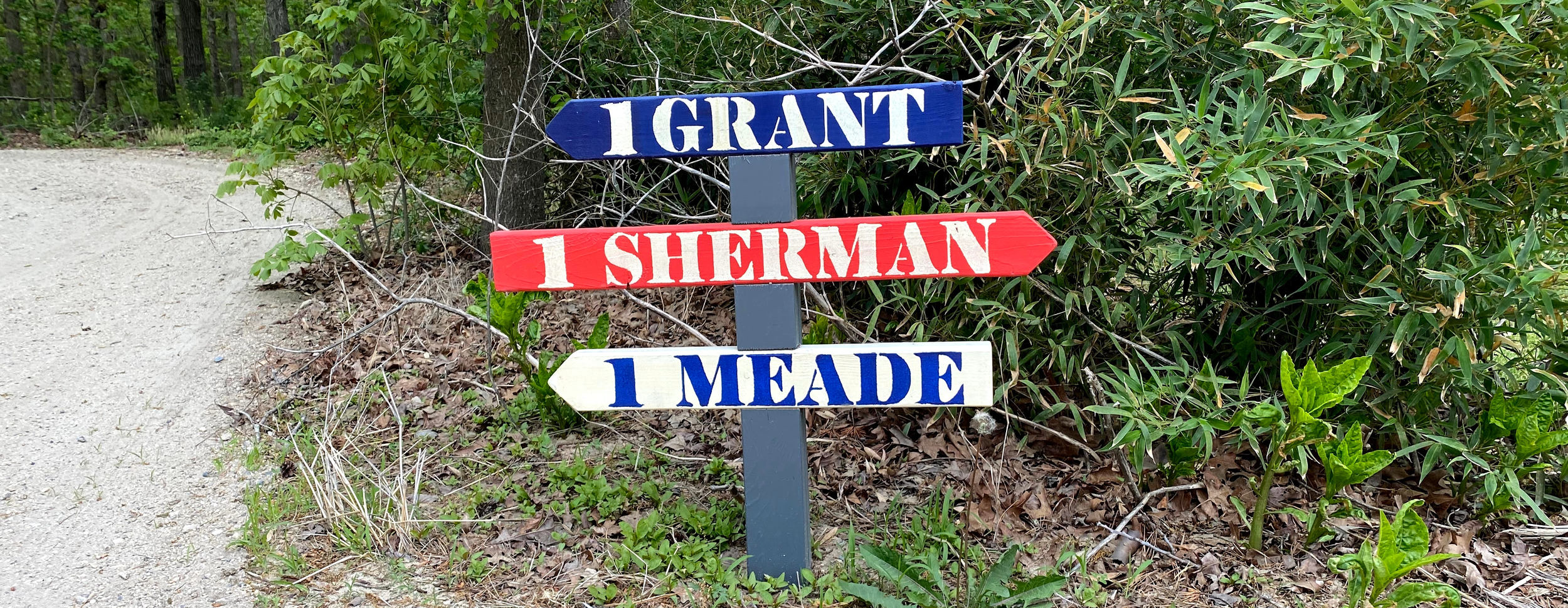
When Sand Barrens opened, the nines were called North, South and West. The Union League chose to rename the nines after Generals Ulysses S. Grant, George Meade and William Tecumseh Sherman as a tribute to the military leaders who commanded the Union Army. By naming these generals, the club honors its foundational 1862 motto, “Amor Patriae Ducit” (Love of Country Leads).
How good was the finished product? It was rated as the second best new design of a private club when it opened and it’s already ranked in the top-15 in the state of New Jersey. Pretty high praise since the Garden State boasts Pine Valley, Baltusrol, Plainfield, Ridgewood, Liberty National, Galloway National, Bayonne and Somerset Hills.
HOLE BY HOLE ANALYSIS: Meade Nine – The opening hole on the Meade Course is a straightaway par four that can be stretched to 401 yards from the black markers. Waste area runs down the entire left side with trees and rough down the right. As with most holes at Union League National, the fairway is fairly wide and your tee ball should favor the right side to leave the best angle to approach. The sloping green is guarded on the right and left by sand and will slope away to the back and right of the surface. What you will learn is that it is imperative that you stay below the hole for any shot at birdie, let alone par.
Number two on the Meade is one of my favorites, a sharp dogleg left par four from an elevated tee which features water fronting the tee box and down the left side of the landing area. After a successful tee ball, you’re left with a short iron to wild putting green that slopes hard from back to front. This several tiered surface is quite tricky and features sand left and water right.
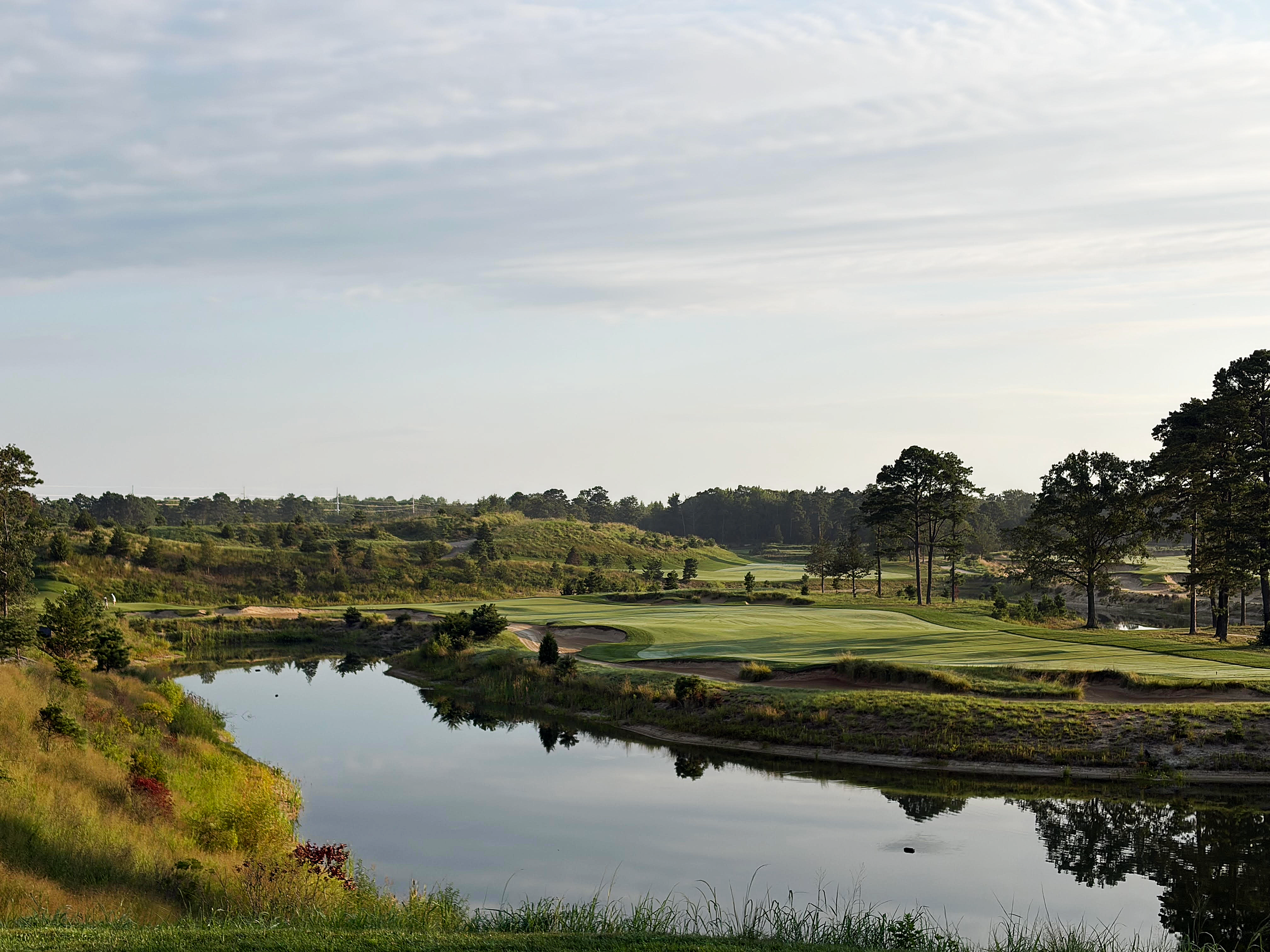
The third is another sub, 400-yard par four that plays straight to the green. Water flanks the entire left side of the hole, while the rolling fairway boasts and deep bunker down the right. The green is one of the widest on the course with an enormous amount of slope. A back-left pin is to be avoided at all costs, as it not only brings the water in play, but a deep fronting bunker.
A real birdie chance lies in waiting at the fourth…well, maybe. From the tips it’s just 325 yards, but don’t be fooled, this is anything but easy. A bunker down the middle of the fairway is a good aiming mark and is easily avoided off the tee. Here is where the tricky part lies. You’re now left with an uphill approach to another wide putting surface that slopes hard from left to right and back to front. Oh, did I forget to mention that bunkers guard the front of the green, so any shot mishit will end up in one of the 16 sand traps. Not so easy now!
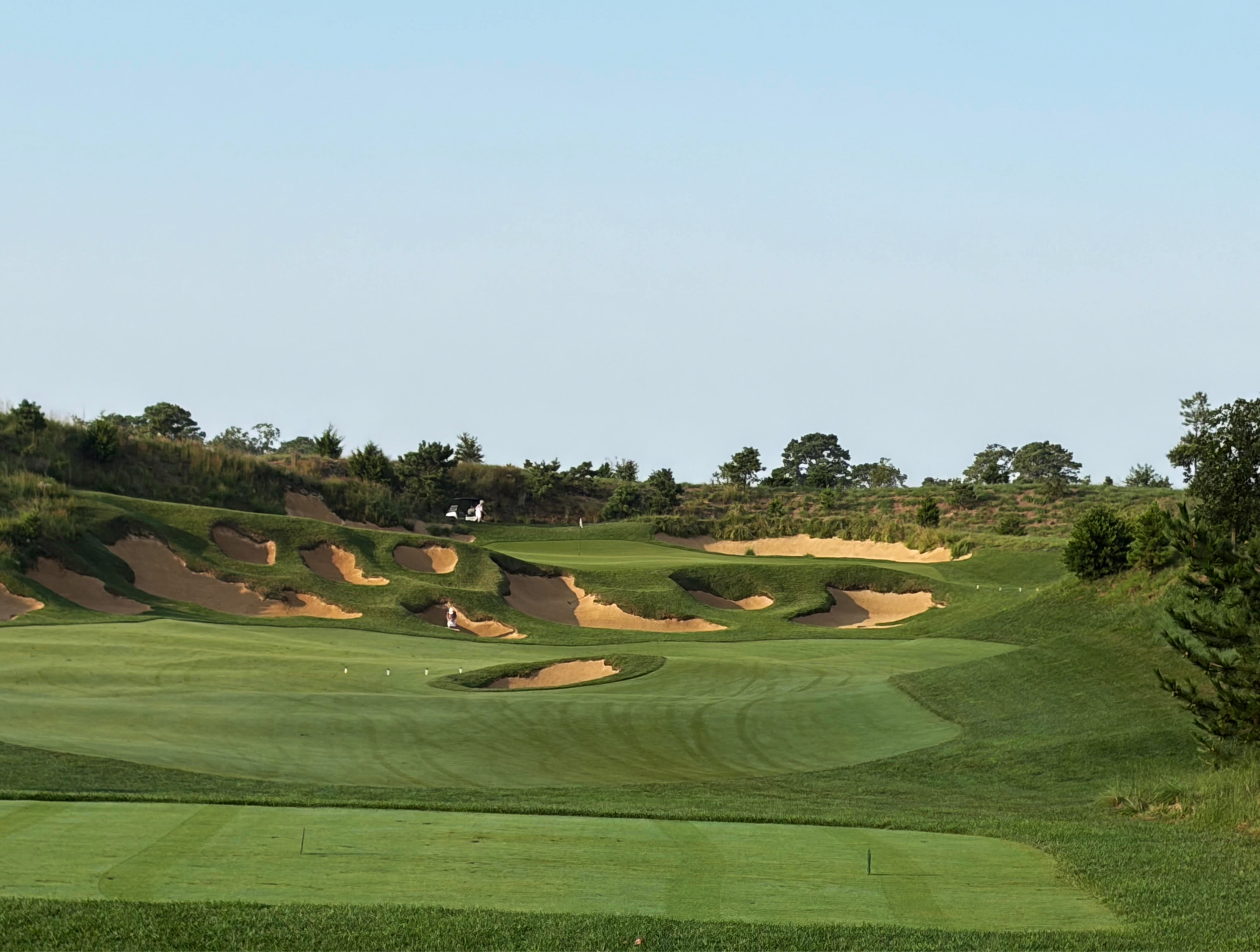
Ranging from 90 yards to 161 yards, the par-3 fifth is a beaut. Playing downhill from the tee, a medium to short iron should suffice to this long, undulating green. Water guards the front and left, with sand right and deep. Although this is the shortest hole on the course, its handicap rating is four!
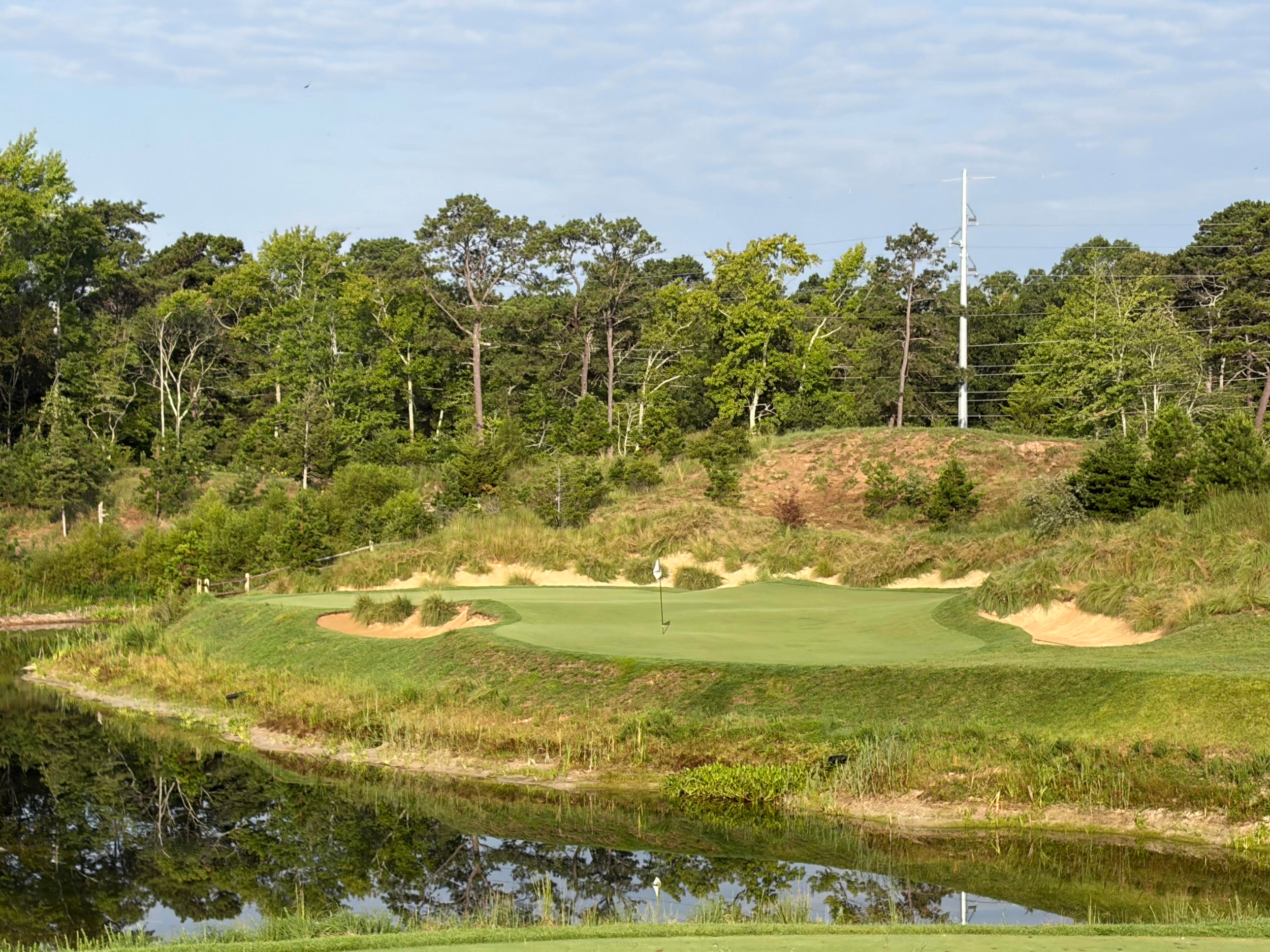
The sixth is a behemoth of a par five, stretching to 581 yards. Water guards the entire right side, not to mention a 100-yard bunker which pinches the fairway off the tee. Your layup is of utmost importance, as you must avoid the trio of traps down the left and of course, the water down the right. The green is a slight kidney shape with sand left and waste area on the right. This might be one of the easier putting surfaces that you’ll find at The National!
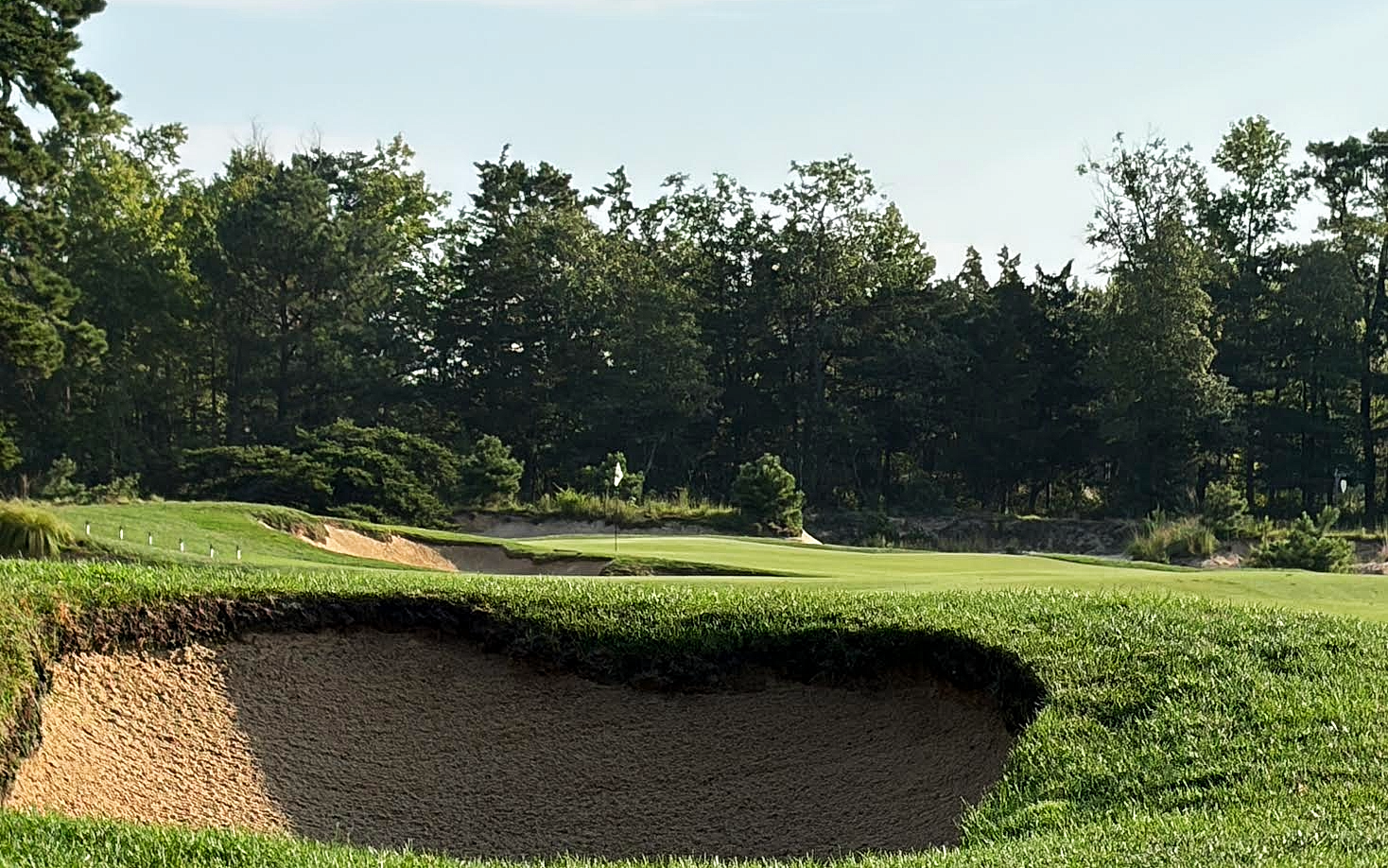
If you thought six was tough, wait till you get to the hardest hole on the nine, the 480-yard, par-four seventh. For us mere mortals, it’s driver and then 3-metal in hopes of getting home in two. Chances are you’ll be short and need a miraculous pitch to make par. Out of bounds left and sandy waste area protect the right. The green is very long and slopes hard from back to front and right to left, so as was mentioned before, stay below the hole.
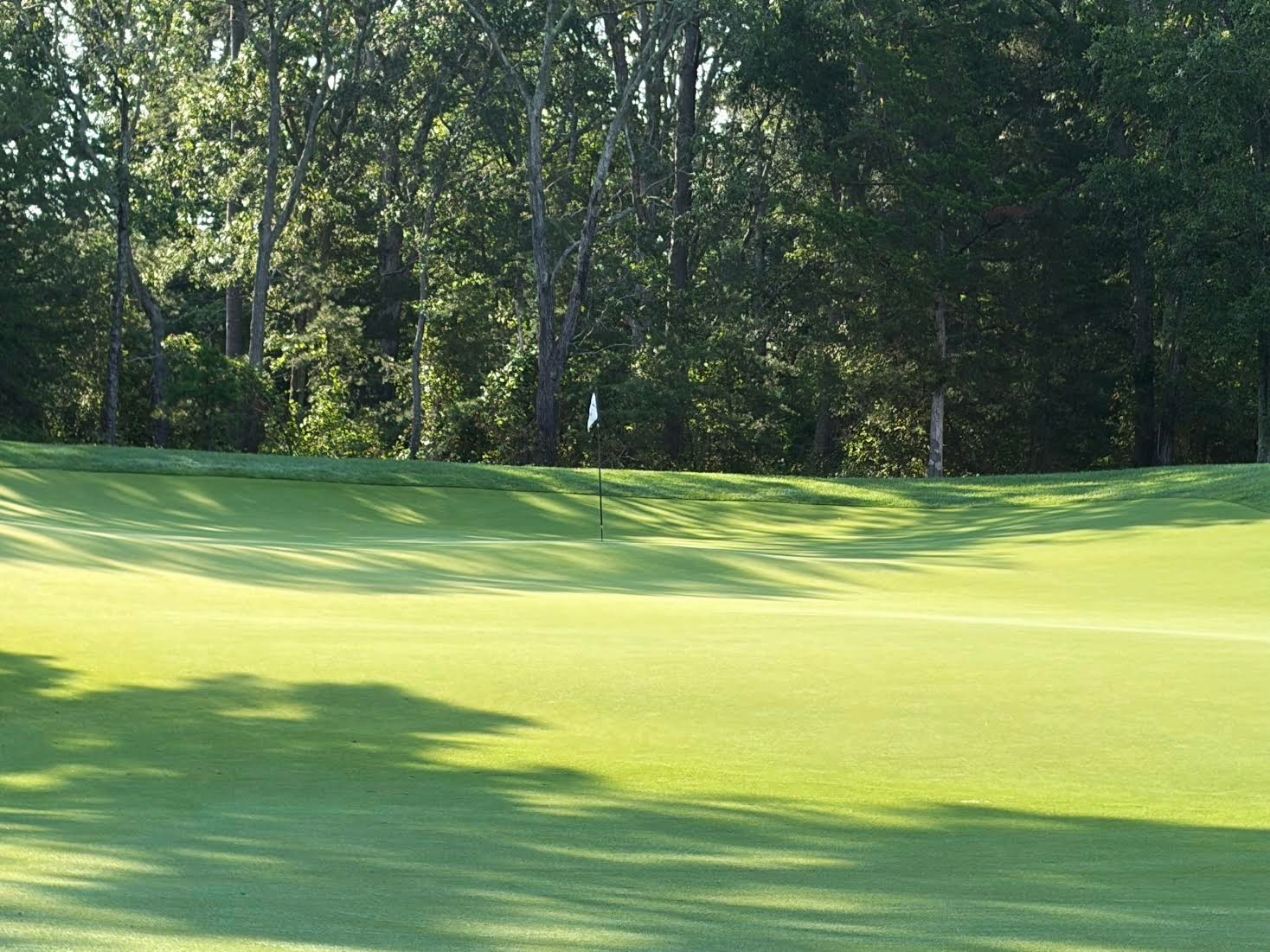
Although it’s rated as the second hardest on the Meade Course, the eighth is a definite birdie hole, despite its 585 yard length. Once again, OB and waste area guard both sides off the tee, but a modestly wide fairway can be attacked. Your layup should favor the right side, as sand comes into play down the left landing area. Now you’re face with a short iron in hand to a very accessible green, one of the smallest on the course. Oh, by the way, missing right with your approach will get very wet!
Number nine is rated as the easiest on the Meade, but this par three can be stretched to just under 200 yards. Water guards the right and deep as you play towards the clubhouse. With everyone watching, you’ll need to be quite accurate with your approach, as the putting surface slopes hard from left to right and features sand and chipping areas, short and right. A par here will garner plenty of applause.
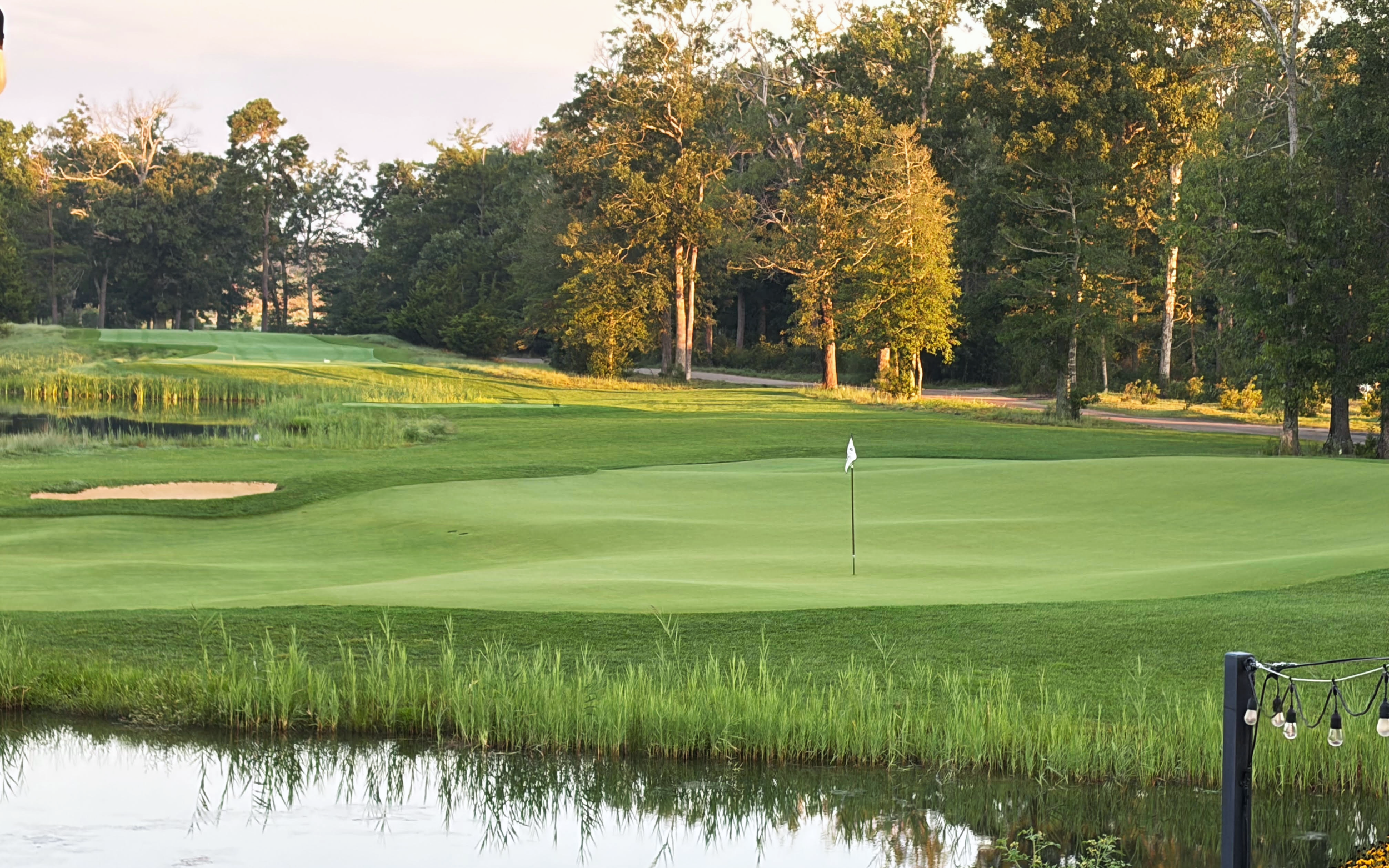
Sherman Nine – The Sherman Course opens with a solid, straight par four of 395 yards. The landing area off the tee is quite generous, with just one fairway trap down the left. The difficulty is now your approach, as the green is surrounded on three sides by water and guarded in the front by a pair of traps. The putting surface is long and slopes front to back and to the left.
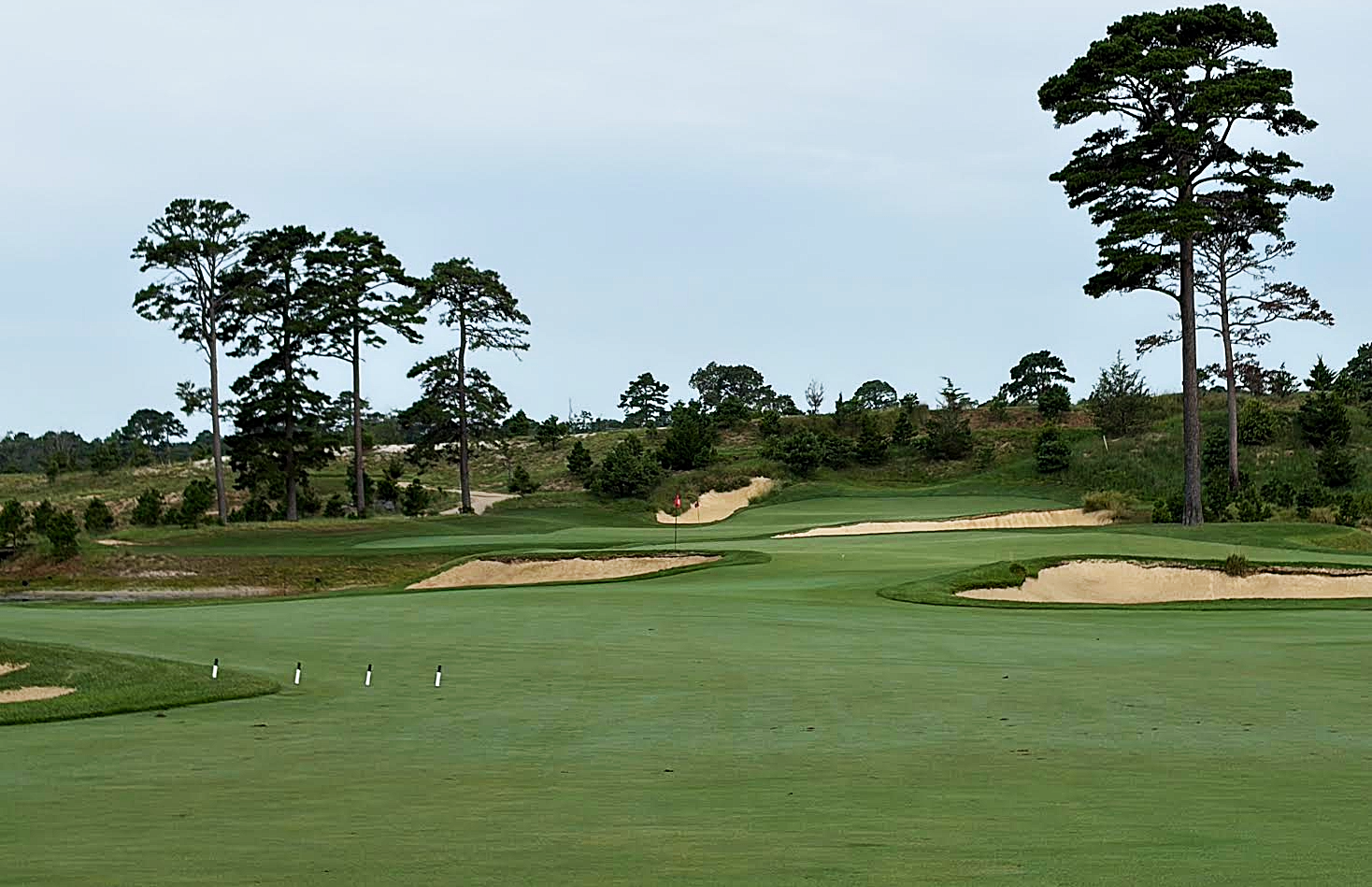
The roller coaster green on the second is the defense of the hole. The putting surface is fronted by water with a bunker left and right. Sloping hard from back to front, this green features plenty of slope and at 194 yards, it’s hard to believe that this is the easiest hole on this nine.
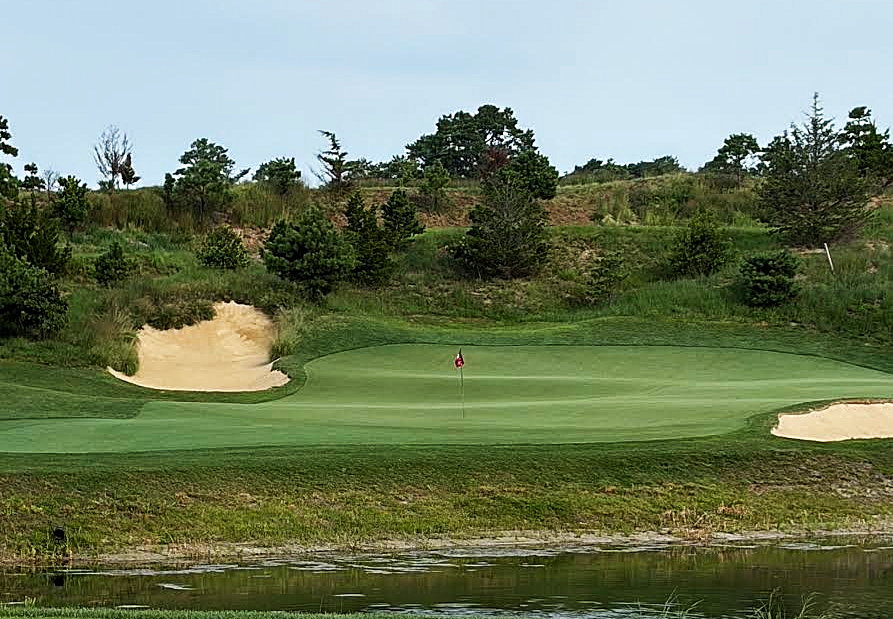
From the easiest to the hardest, that’s what awaits at the par four, third. Reaching 466 yards in length, this hole features a wide fairway, however the big hitters will have to deal with a trio of traps on the right and a waste area on the left. Now the fun begins, as the approach to the green is a difficult one with water guarding the left side and an expansive chipping area on the right. One of the few greens devoid of sand, this surface slopes from front to back and hard, right to left.
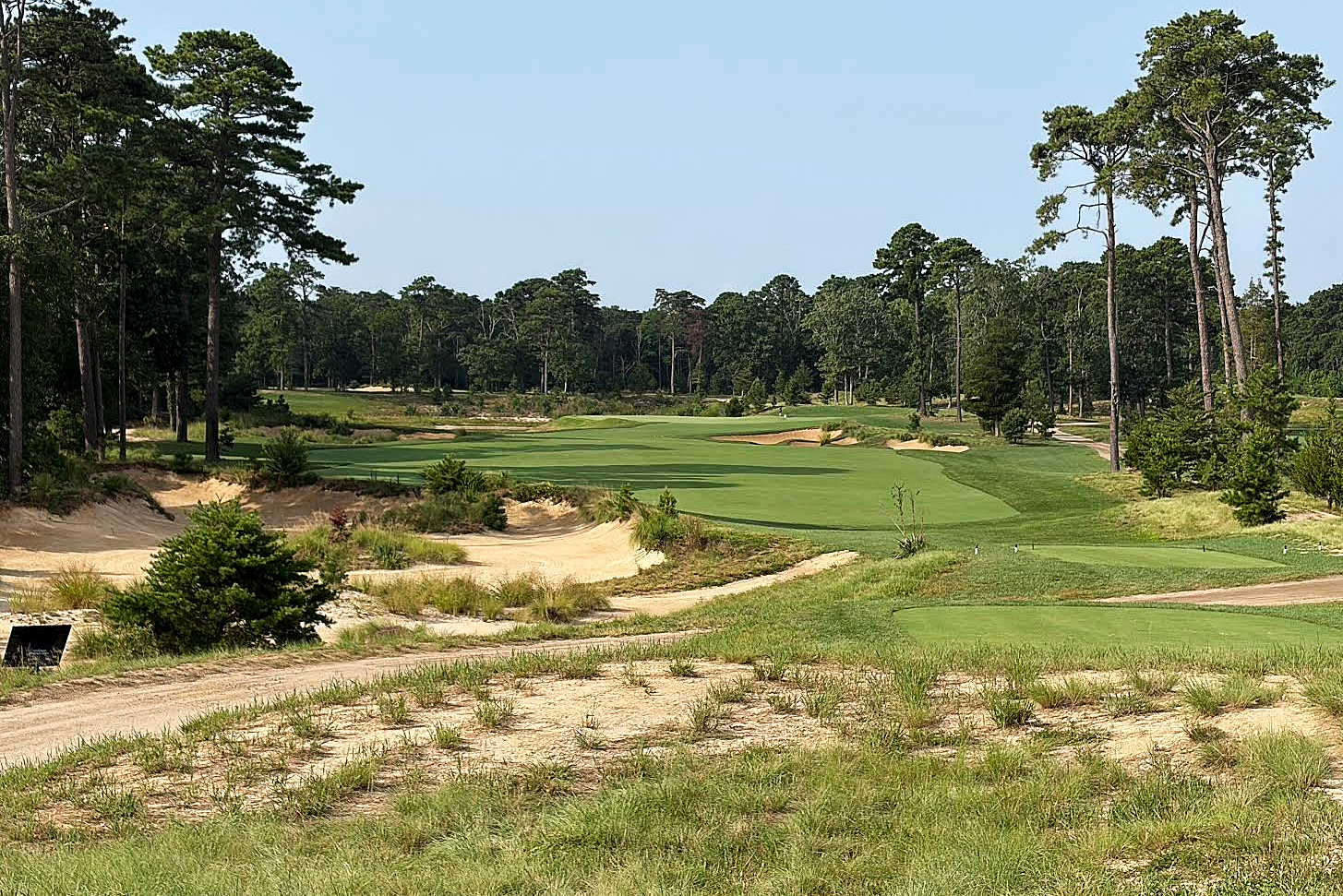
Number four is another difficult par four, one of three consecutive 400-yard-plus holes. A very expansive landing area awaits off the tee, but the trouble is with the approach. The green is set off to the left with waste area surrounding most of the surface. The green is long and lean and runs hard to the front. A long iron or fairway metal second will be hard to hold the green. An additional putting surface is available to the right, which is sometimes used.
The fifth is another difficult par four at 431 yards. As is the case with many of the holes here, the fairway is quite generous, however a deep bunker protects the left side of the landing area and three trips guard the right. A medium to long iron is needed to reach the large putting surface, fronted by a deep trap. Miss long and you’ll stuck in sand and left is flanked by a chipping area that sits below the surface.
The longest hole on the Sherman Course is the par-5 sixth at 558 yards. Accuracy is the key here, as a large waste area down the left encroaches on the fairway. Your lay up must now avoid a fairway bunker that sits in the center of the landing area, roughly 100 yards short of the uphill green. With a short iron, you must be deadly accurate to one of the most difficult putting surfaces at Union League. This boomerang shaped surface runs hard from back to front and right to left with several tiers and three guarding traps. A short, left shot will carom back off the green, so be aware.
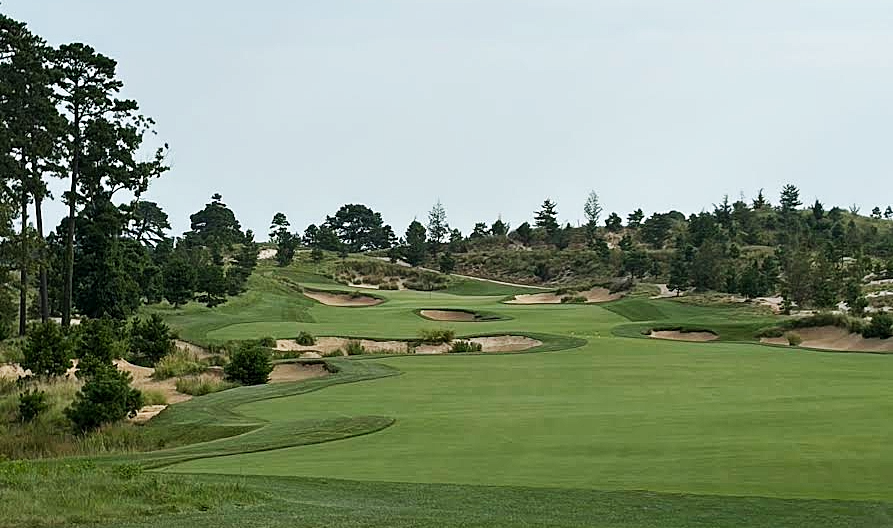
Now it’s time for the longest par three at Union League National, the robust 247 yard seventh. From an elevated tee, most players will move up a marker or two to a reasonable yardage, which I did! Water is your nemesis on this hole, as it protects the entire right side and behind the long and undulating green. No sand is needed here, as length and a difficult putting surface is certainly enough to discourage even the best.
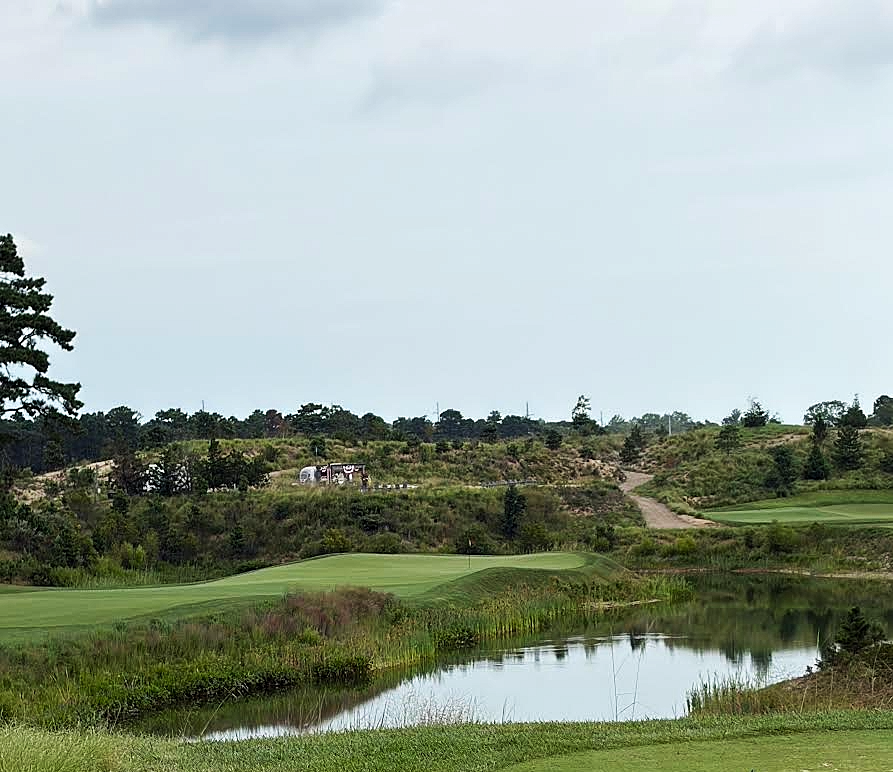
One of the shorter holes comes by way of the eighth on the Sherman nine at 340 yards. Playing uphill from tee to green, the key here is finding the fairway, as water right, bunker in the center and scrub left will keep you honest. Your uphill approach will need to be spot on, avoiding the seven bunkers that guard the right of the green and sit well below the surface. The promised land is long and narrow and slopes hard from back to front and left to right. It’s a definite birdie chance, but par is a good score.
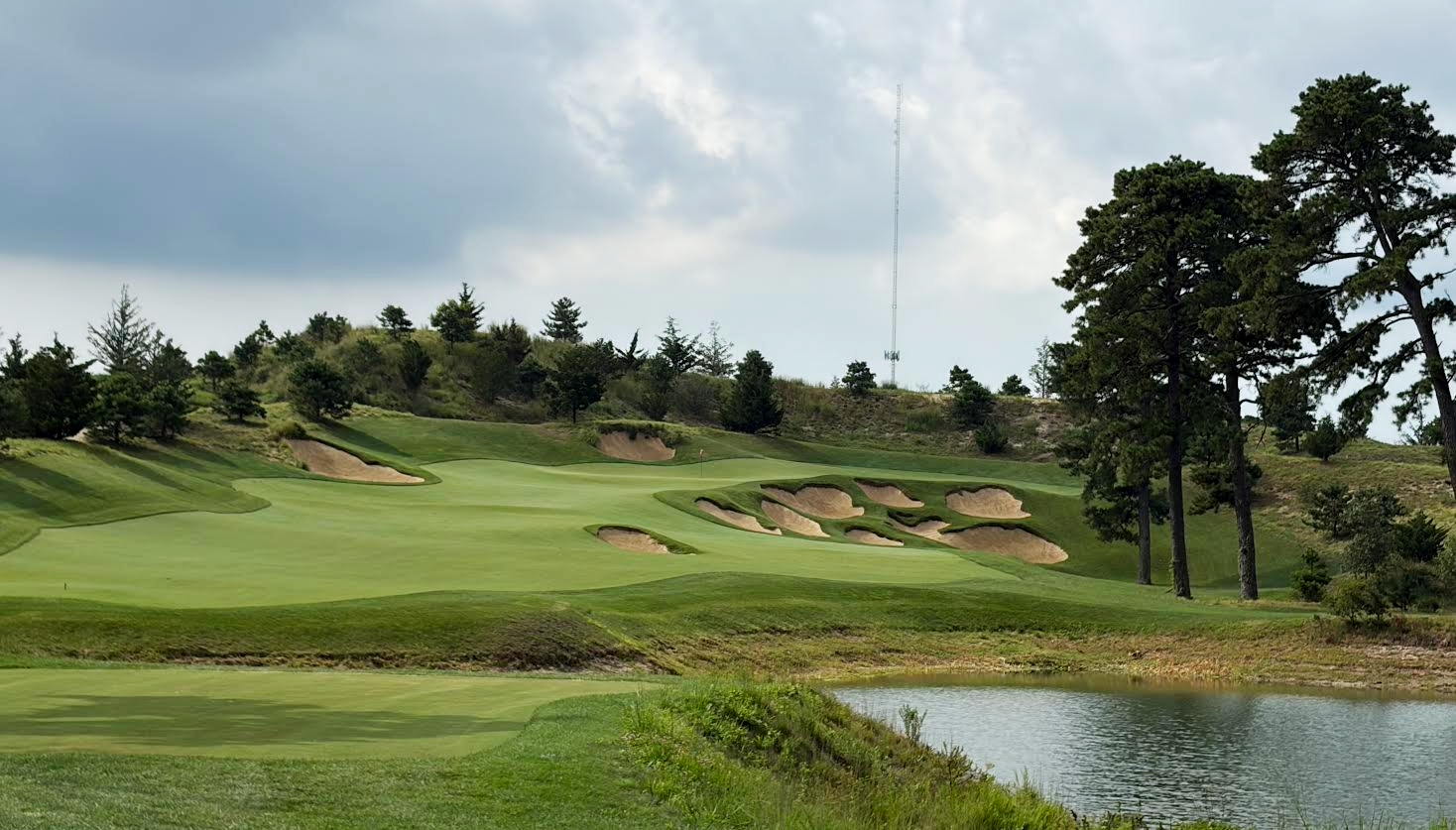
Another elevated tee, the ninth is an average-lengthed, par-5 of 530 yards. Avoid the bunker down the left fairway and the long trap on the right and you might be able to reach in two. You’ll have to avoid the bunker 50 yards short of the green, right in the center of the fairway, but it’s possible. The green is long with a bunker left and a long trap protecting the right of the surface. The green is uphill, with a back pin playing as the most difficult.
Grant Nine – The Grant course starts off with one of five 400-yard par 4s. The fairway is quite generous with sand on the right side. A medium iron will remain after a successful tee ball. The putting surface is quite large with sand guarding both sides. A back-left flag could be quite difficult to attack, so play toward the center of the green to set up an easy par.
The first par-5 on this nine is the second hole, running 541 yards from the black markers. A horseshoe bunker raps around both sides of the fairway all the way through the green. The landing area is quite generous and the layup area is also wide, leaving a very short approach to a putting surface that’s set off to the right. The green is long, but quite narrow, but a definite birdie opportunity.
The shortest hole at the National is the third hole on the Grant Course, just 135 yards in length. It’s all carry over a sandy waste area to the green. The putting surface is very long and narrow, which a chipping area short of the surface and a drop off to the right. With a short iron in hand, another birdie chance, as long as you negotiate swale in the center of the green.
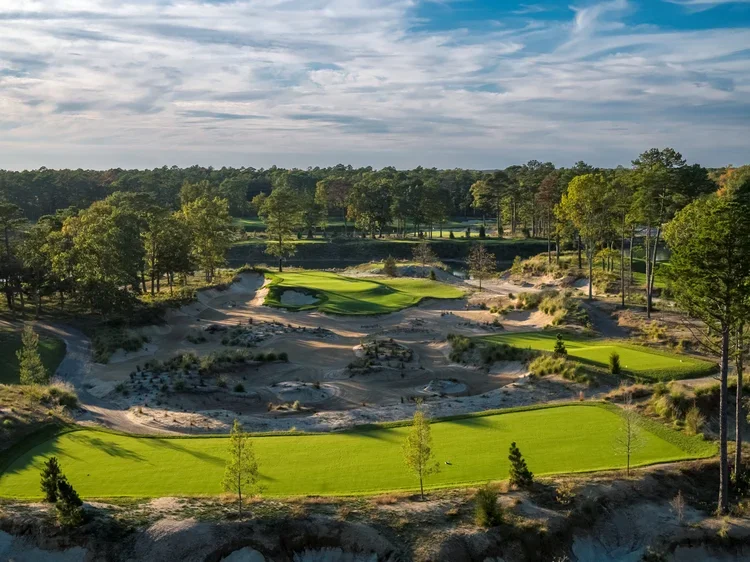
Number four is a wonderful, dogleg right par four reaching 443 yards in length. Large mounding down the right side protect the corner of the dogleg, thus forcing the player down the left side where water lurks. A medium to long iron will remain to an elevated green that is very long and runs hard from back to front. One of the more difficult holes at the National.
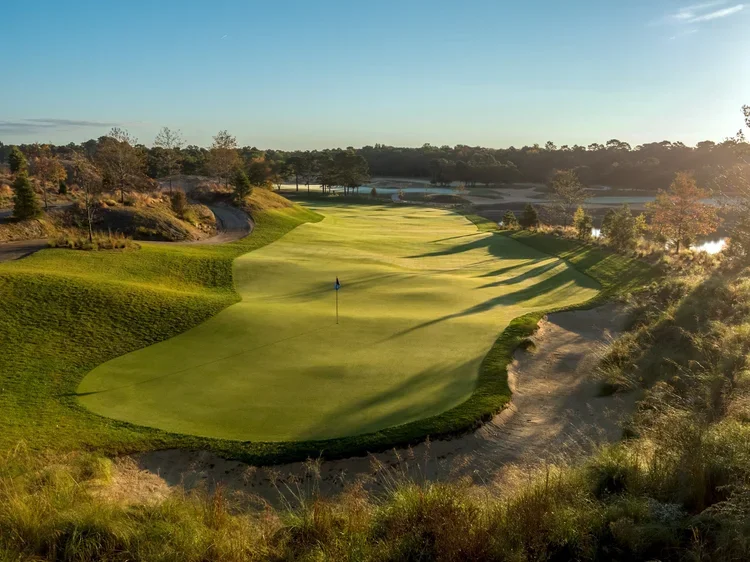
The fifth is the second par-5 on the nine, stretching to a robust 571 yards. From an elevated tee, favor the left side of the wide fairway, as you avoid the sand down the right. Although the fairway tightens as you move down the hole, there is plenty of room for a quality layup. Water does come into play as you get closer to the green, but as long as you play down the left, you’ll have an easy approach to an undulating putting surface that has plenty of slope.
The second par-3 is a beauty of 196 yards from the black markers. Water again comes into play, as it covers the entire right side and deep. In addition, a massive bunker stands guard for a back-right flag. If the pin is up front, you’ll have a better chance at par, otherwise, bogey or worse is a distinct possibility.
The most difficult hole on the Grant nine is the 495 yard, par-4 seventh. Sweeping from right to left, you’ll need to favor a draw around the corner of the dogleg, thus avoiding the waste area from tee through the landing area. Even if you negotiate your tee ball, you’re left with a long iron or fairway metal to you guessed it, a long, wide undulating green. Sand protects the right side and left, so you’ll need to be spot on.
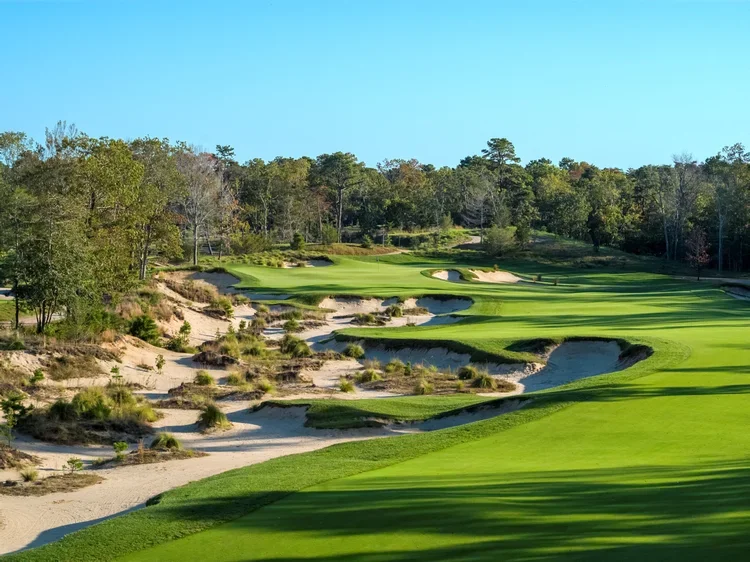
The eighth is another massive par four that features a 70-yard wide fairway, although it tightens the further you hit your tee ball. Another long club will be needed to reach the putting surface that has plenty of movement. Favor the right side, as the ball will move from right to left towards the hole.
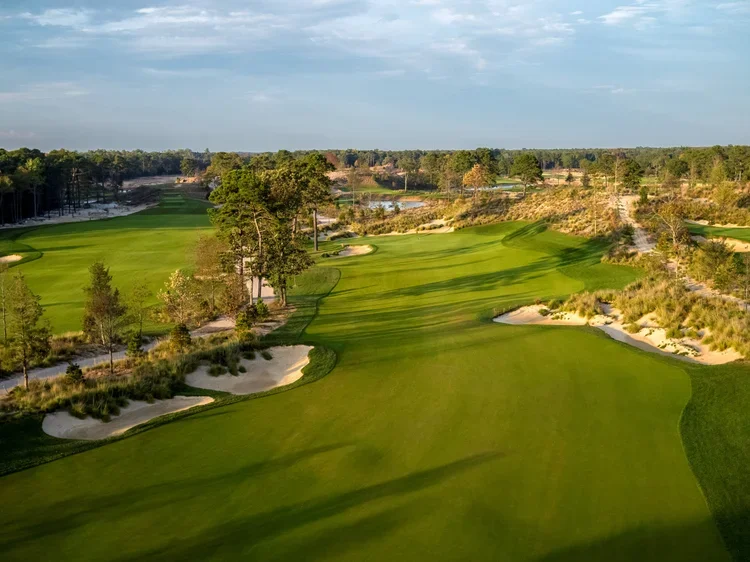
Your closing hole on the Grant nine is another rugged par four that reaches 455 yards. From an elevated tee, everything is right in front of you, as it plays straight away to the green. As with most holes, sand is the protector of each layout. The landing area is generous, but the putting surface is very undulating and depending upon pin placement, a three-putt or dare I say worse could be an issue.
FINAL ANALYSIS: If you think that this course reminds you of Sand Barrens, you are surely mistaken. Although Fry designed the original course with his then partner Hurdzan, Fry and Straka completely reimagined this layout.
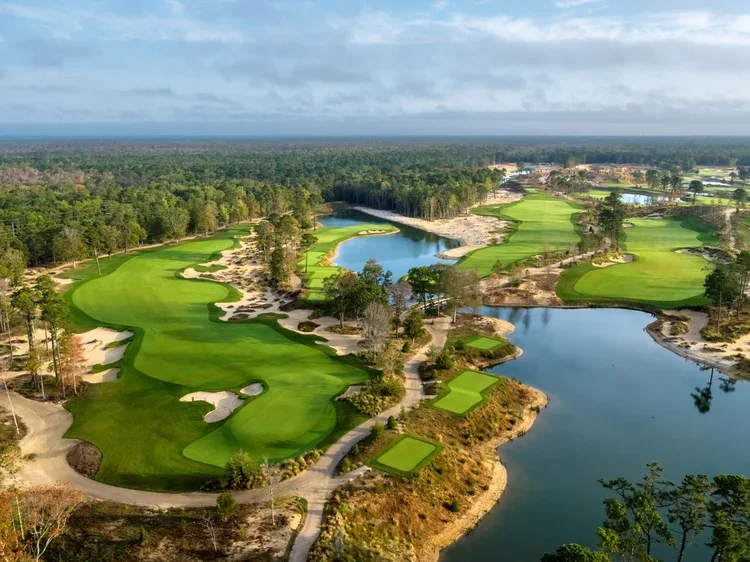
From tee to green and everything in between, Union League National is a completely different course when it was originally crafted in 1996. Fry and Straka have really elevated this track into an amazing venue.
As I always say, pick the correct tee markers to play from, as the nines can play anywhere from 4,600 yards to over 7,100 yards. The fairways are quite generous, but this is a second shot course, as you must negotiate the greens properly. Long in most cases will leave you with a difficult two-putt and short will engage your short game to the utmost difficulty.
The defense of the course is no doubt the putting surfaces. Most of the greens are extremely long with plenty of pin placement options. Not only that, your putting prowess will be tested at the highest level.
All three nines feature distinct qualities. The Meade nine boasts strategic bunkering with island-like features, which require accurate distance control. The Sherman holes are a classic risk-reward with massive sand features and severely contoured greens, while the Grant nine is the longest and most difficult, with five par-4s over 400 yards and plenty of elevation changes!
Union League National is defined by its massive and undulating greens, its enormous bunkers and beautiful and well-maintained waste areas. There is no doubt that this course is the flagship property in the portfolio of the Union League.