









Author: Sam Fried
Sam Fried spent 40 years chasing birds before he started chasing golf courses. A reformed trial lawyer, he started his own birdwatching touring company that offered the only combined birding and golfing trips in the world. He invented the birding/golfing handicapping system, wherein the winner combined his golf score, handicap and the number of bird species identified during a round. Despite this idea never catching on, Fried continues to track the number of bird species he's seen and photographed and the golf courses he has played - 637 as of this writing. His favorite quote: "Get obsessed and stay obsessed", Coach Bob, in The Hotel New Hampshire, by John Irving.
Many years ago I had a terrible case of the putting yips. I could barely pull the putter back, knowing the result would be a disaster. I managed to solve this problem by switching to an early model of a “broomstick” putter. Chest high, stiff as a phone pole, with a heavy winged head so unforgiving that a direct center hit was required to send the ball anywhere near the target. But I loved it because it swung like a pendulum and my yips disappeared. Suddenly, I was making putts again and I had confidence in my stroke for the first time in years. And that, my friends, is the name of the game for successful putting.
One day, as I was scrolling through Facebook, I came across a video from Performance Golf hailing their new RS1 putter as “revolutionary” and “changing putting forever”. My immediate reaction was, “How many times have I already heard that from every company that introduced a new putter design”? But the more I watched and saw this very unique and creative design, the more I was intrigued. The shape of the putter head was unusual, but not unlike others I had seen before. However, this putter was center shafted (not new) but the shaft was BEHIND the putter head (new) and 75% of the putter’s weight was in FRONT of the shaft (very new). The manufacturer claimed that this configuration plus “forward axis weighting” prevented “putter drift” that causes the putter to go off line when the the golfer’s stroke tends to stray. This was most intriguing to a golfer whose putting stroke rarely found gold at the end of its rainbow arc.
Performance Golf was kind enough to send me a sample RS1 putter to review. My first impression was that this is one weird looking putter, reminiscent of a medieval battle ax, topped by a somewhat bizarre “Dual Pistol Grip” – lengthy, curved, wide and narrow all at the same time. But when I prepared for a stroke, the unusual grip fit my hands like it was part of me. However, a great grip does not a great putter make.
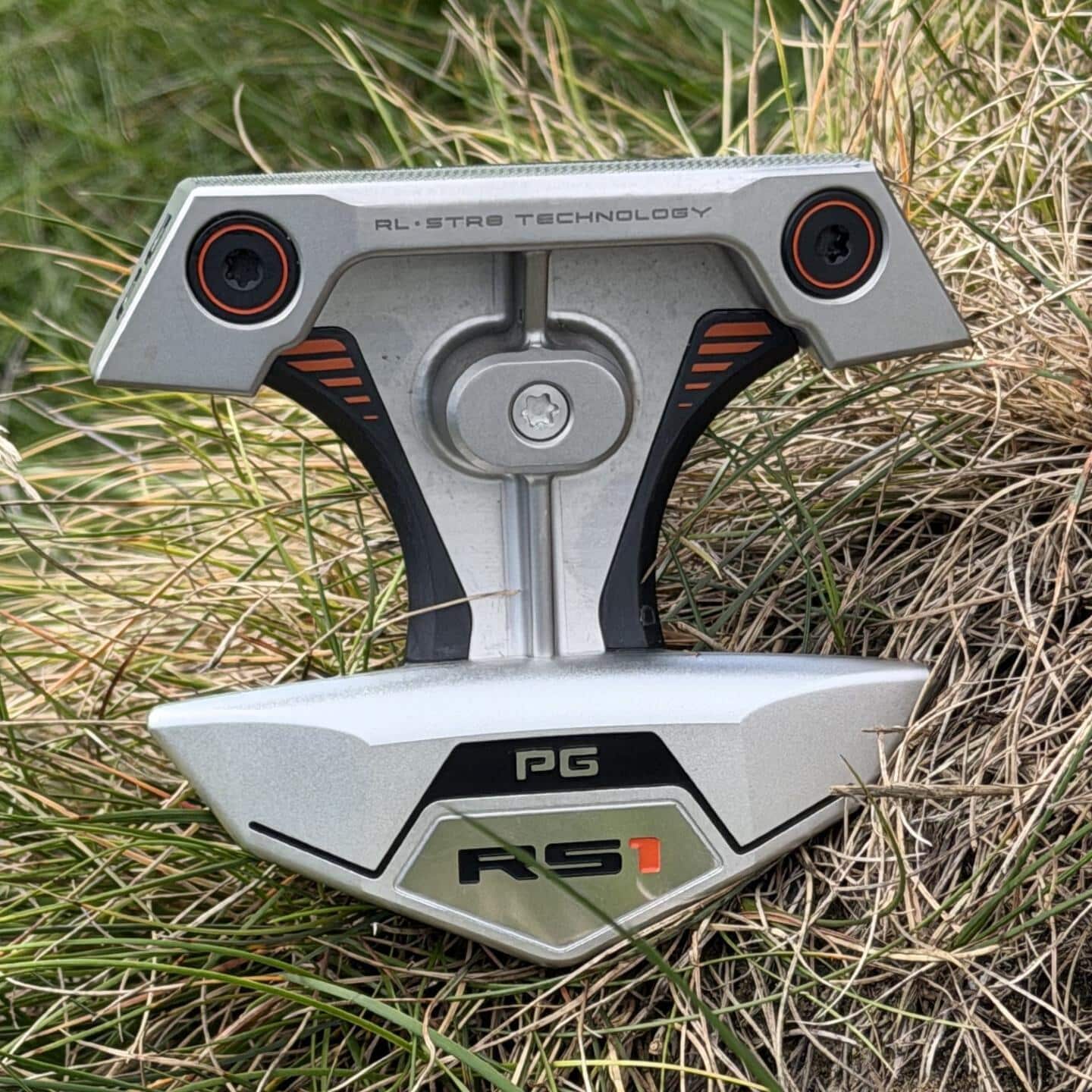
I spoke with Chris McGinley, designer of the RS1, who previously spent 20 years designing putters for Titleist. Now working with Performance Golf, Chris persevered through several years of creative craftwork to bring the RS1 to its final form. Chris told me, “From the earliest days of golf, putters have basically been the same, despite several creative variations. Golfers have always had to fight the face of the putter drifting offline due to the shape and weighting of the putter and variations in their strokes. The RS1, by using forward weighting in the head and shaft placement, removes that drift so the putter face can come through on a straight line.”
I took the RS1 to a local course so I could put it through its paces on a real putting green. The first thing I noticed was that the staggering arc in my back stroke had almost disappeared! Using the multiple aiming lines on the putter head, I started with flat four-foot putts and I made them all. Working backwards, when reading the break in the green was necessary, the RS1 performed extremely well, despite my often inaccurate green-reading skills. The ball came off the face with a pleasing sound and rolled out smoothly off its 3.5 degree lofted face. Tomorrow, the RS1 will face its ultimate test – playing a round at TPC Deere Run, site of the PGA Tour’s John Deere Classic in Silvis, Illinois.
The greens at the TPC ran fast and true so they were a perfect test for a new putter. On the practice green, if I made a good stroke, the RS1 rolled it truly on line. If I made a poor stroke, well, no putter can fix that. So let’s throw out the poor strokes, because in truth, I am still getting used to the weight and balance of the RS1. During the round, I made four putts over 10 feet, one a curling fifteen-footer for birdie. I made a few four-footers, when I let the RS1 do its thing, but I also missed a couple of short ones because I made poor strokes. In lining up a putt, it is essential to keep the ball within aiming lines on the club. Solidly struck putts make a “thunk” sound while striking the ball toward the heel or toe makes a “ping” sound, providing instant feedback that the stroke was off. The hardware can be great, but if the software doesn’t come through…
Bottom line:
The RS1 is a novel and excellent addition to the always widening world of putters. The weighting and the shaft position really did cure my severely arcing stroke, especially on shorter putts, giving me much more confidence that the ball would find the back of the cup. On longer, more curling putts, the more I trusted the feel of the RS1, the better I did. I had many tap-ins from only a few inches away and there’s never anything wrong with that. Just like every putter that’s ever been made, the RS1, no matter how good it is, still can’t read greens, give you the proper pace or always make a pure stroke. Has the RS1 found a permanent home in my bag? I think so, but we all know how fickle putters can be, so it will have to keep performing at a high level to retain that exalted position. Buy your RS1 Today by visiting the Performance Golf website.